
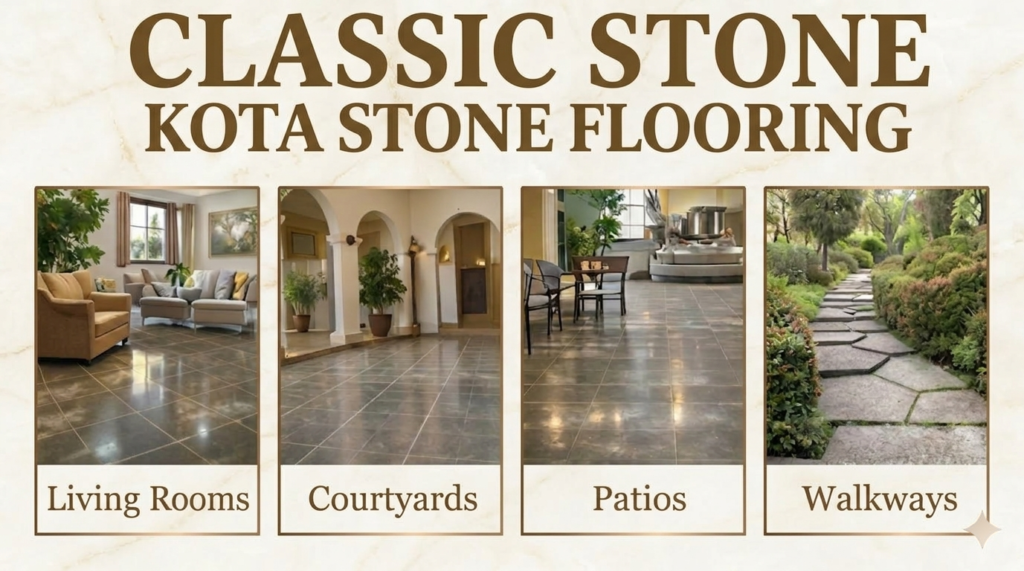
Top Areas for Kota Stone Flooring
Introduction
Selecting the right flooring material is one of the most important decisions in home construction and architectural design. Flooring not only determines the visual appeal of a space but also affects durability, comfort, maintenance requirements, and long-term costs. In a country like India, where climatic conditions vary from extremely hot summers to heavy monsoons, choosing a flooring material that can handle these environmental challenges is essential.
Over the past several decades, there has been a growing interest in natural stone flooring in India. Architects, builders, and homeowners are increasingly choosing natural materials because they offer durability, sustainability, and a timeless aesthetic. Unlike synthetic flooring options, natural stone develops character over time and often lasts for generations.
Among the many natural stone materials available today, Kota stone flooring continues to be one of the most practical and widely used options. Known for its strength, affordability, and cooling properties, Kota stone tiles are commonly used in both residential and commercial buildings.
Some of the key characteristics that make Kota stone tiles a preferred flooring material include:
- Excellent durability and long lifespan
- Naturally cool surface suitable for warm climates
- Cost-effective compared to premium stones
- Low maintenance requirements
Because of these advantages, Kota stone has been used in Indian homes, public institutions, commercial buildings, and government structures for decades. Even today, many architects continue to recommend it as a reliable and practical flooring material.
What is Kota Stone?
Kota stone is a fine-grained natural limestone that originates from the Kota district in the state of Rajasthan, India. It is formed through geological processes over millions of years, resulting in a dense and durable stone that is highly suitable for flooring and construction applications.
One of the defining characteristics of Kota stone is its strength and uniform texture, which allows it to be cut into slabs or tiles and polished to create smooth flooring surfaces.
Kota stone is available in several natural shades, including:
- Blue
- Green
- Brown
- Grey
These earthy tones make the stone visually appealing while also allowing it to blend easily with different architectural styles.
Kota limestone flooring has become extremely popular across India because it provides a balance between durability, cost-effectiveness, and natural beauty.
Today, Kota stone is widely used in:
- Residential homes
- Office buildings
- Educational institutions
- Hospitals
- Government buildings
- Commercial complexes
Many buildings constructed decades ago still retain their original Kota stone flooring, demonstrating the long-lasting performance of this natural material.
Why Kota Stone is Ideal for Different Areas
One of the major Kota stone flooring benefits is its versatility. Unlike many flooring materials that are limited to specific environments, Kota stone performs well in multiple settings.
Several characteristics make Kota stone suitable for different areas of a building:
High Strength
Kota stone is dense and durable, allowing it to withstand heavy foot traffic without cracking or deteriorating.
Natural Cooling Properties
The stone remains relatively cool underfoot, making it comfortable in hot climates.
Slip Resistance
Its natural texture provides better grip compared to highly polished surfaces.
Weather Resistance
Kota stone can handle exposure to moisture and temperature changes, making it suitable for outdoor spaces.
Because of these qualities, Kota stone flooring can be used in both indoor and outdoor environments, making it one of the most versatile Indian stone flooring options available.
Top Areas for Kota Stone Flooring
Kota stone tiles can be used in a wide range of spaces within residential and commercial properties. Below are some of the most common areas where Kota stone flooring performs exceptionally well.
1. Living Rooms
The living room is one of the most frequently used spaces in any home, which means the flooring must be both durable and visually appealing.
Kota stone tiles are well suited for living rooms because they offer:
- Strong resistance to daily wear and tear
- A natural and elegant stone appearance
- Easy maintenance
The earthy tones of Kota stone create a warm and welcoming atmosphere, while its durability ensures that the floor remains in good condition even after years of use.
For homeowners seeking a practical yet timeless flooring solution, Kota stone for homes is an excellent option for living spaces.
2. Courtyards
Courtyards are a common feature in many traditional Indian homes. These open spaces serve as areas for relaxation, social gatherings, and natural ventilation.
Kota stone works particularly well in courtyards because of its:
- Natural cooling properties
- Resistance to outdoor weather conditions
- Ability to withstand heavy use
Many traditional houses across India feature Kota stone flooring in courtyards, where it helps maintain comfortable temperatures during hot summers.
The stone’s natural look also blends well with outdoor landscaping and architectural elements.
3. Verandahs and Balconies
Verandahs and balconies are semi-outdoor areas that require flooring materials capable of handling both indoor and outdoor conditions.
Kota stone is an excellent choice for these spaces because it is:
- Strong and weather resistant
- Less slippery than highly polished surfaces
- Suitable for covered outdoor environments
In many homes, Kota stone tiles are used in verandahs to create a seamless transition between indoor living spaces and the outdoors.
Its durability ensures that the flooring remains stable even when exposed to changing weather conditions.
4. Kitchen Floors
Kitchens are high-traffic areas where flooring must withstand spills, heavy usage, and frequent cleaning.
Kota stone flooring offers several advantages in kitchen spaces:
- Durable surface capable of handling daily activity
- Easy to clean with simple maintenance routines
- Naturally slip resistant compared to glossy flooring materials
Because of these benefits, many homeowners choose Kota stone tiles for kitchen flooring, particularly in homes that prioritize practical and long-lasting materials.
5. Garden Pathways and Outdoor Areas
Outdoor spaces such as gardens and patios require flooring materials that can withstand exposure to weather elements.
Kota stone is commonly used in garden pathways and landscape designs because it offers:
- Excellent weather resistance
- Strong structural integrity
- Natural appearance that blends with outdoor surroundings
The earthy tones of Kota stone complement plants, lawns, and garden features, making it a popular choice for outdoor stone flooring.
Many landscape designers incorporate Kota stone tiles in pathways, patios, and seating areas.
6. Staircases
Staircases require flooring materials that provide both strength and safety. Because stairs experience constant foot traffic, durability is essential.
Kota stone is widely used for staircases because it offers:
- High strength and structural reliability
- Natural grip that reduces the risk of slipping
- Long lifespan even with frequent usage
Both indoor and outdoor staircases can benefit from the durability and stability of Kota stone.
Its practical performance makes it a common choice in residential buildings as well as public structures.
7. Utility Areas and Service Spaces
Utility areas often experience heavy usage and require flooring materials that are both durable and economical.
Kota stone is particularly suitable for these areas because it is:
- Cost-effective compared to many other natural stones
- Resistant to wear and moisture
- Easy to maintain
Common utility areas where Kota stone flooring is used include:
- Storage rooms
- Utility spaces
- Wash areas
- Service corridors
These spaces benefit from the durability and practicality of affordable natural stone flooring.
8. Commercial Corridors and Public Spaces
Beyond residential applications, Kota stone is also widely used in commercial and institutional buildings.
Its ability to withstand heavy foot traffic makes it ideal for large public spaces.
Common examples include:
- Schools and educational institutions
- Government offices
- Hospitals
- Public corridors
Many such buildings rely on Kota stone flooring because it provides a long-lasting and economical flooring solution.
Even after years of use, properly maintained Kota stone floors continue to perform well.
Why Architects Still Prefer Kota Stone Flooring
Despite the availability of modern flooring materials, many architects continue to recommend Kota stone for construction projects.
One reason is its compatibility with passive cooling architecture, which aims to reduce heat inside buildings through natural design strategies.
Because Kota stone remains relatively cool, it contributes to more comfortable indoor environments.
Architects also value Kota stone because it offers:
- Long-lasting durability
- Cost-effective flooring for large spaces
- Natural aesthetics suitable for different architectural styles
For these reasons, Indian stone flooring like Kota stone remains a practical choice in both traditional and contemporary building designs.
Choosing the Right Kota Stone Supplier
The quality of Kota stone can vary depending on the quarry source and processing methods. For this reason, selecting a reliable supplier is important when planning a flooring project.
High-quality stone ensures:
- Uniform thickness and finish
- Better durability
- Consistent color and texture
Many homeowners and builders prefer sourcing natural stone from trusted suppliers such as Classic Stone, known for offering well-processed Kota stone slabs suitable for residential and commercial flooring applications.
Working with reputable suppliers helps ensure that the stone used in construction meets proper quality standards.
Maintenance Tips for Kota Stone Flooring
Although Kota stone is relatively low maintenance, proper care can help preserve its appearance and durability for many years.
Some simple maintenance tips include:
- Sweep floors regularly to remove dust and debris
- Mop using clean water or mild cleaning solutions
- Avoid strong acidic cleaners that may damage the stone
- Polish occasionally to restore natural shine
- Apply sealant in moisture-prone areas if necessary
With proper care, Kota stone flooring can last for several decades without significant deterioration.
Conclusion
Kota stone has remained one of the most reliable and practical natural flooring materials used in Indian architecture. Its combination of durability, affordability, and climate suitability makes it ideal for a wide range of residential and commercial spaces.
Some of the key Kota stone flooring benefits include:
- Exceptional durability
- Natural cooling properties
- Cost-effective installation
- Low maintenance requirements
- Versatile indoor and outdoor applications
From living rooms and courtyards to staircases and commercial corridors, Kota stone tiles continue to prove their value in modern construction.
As interest in natural stone flooring in India continues to grow, Kota stone remains one of the most dependable and widely used materials for long-lasting and practical flooring solutions.