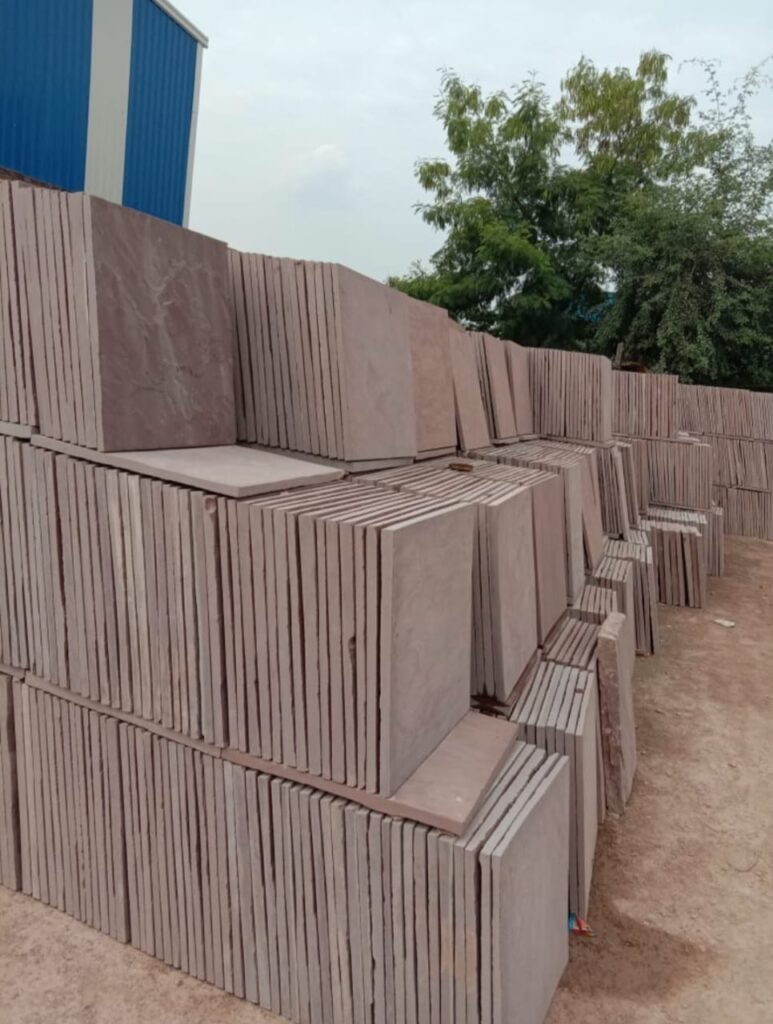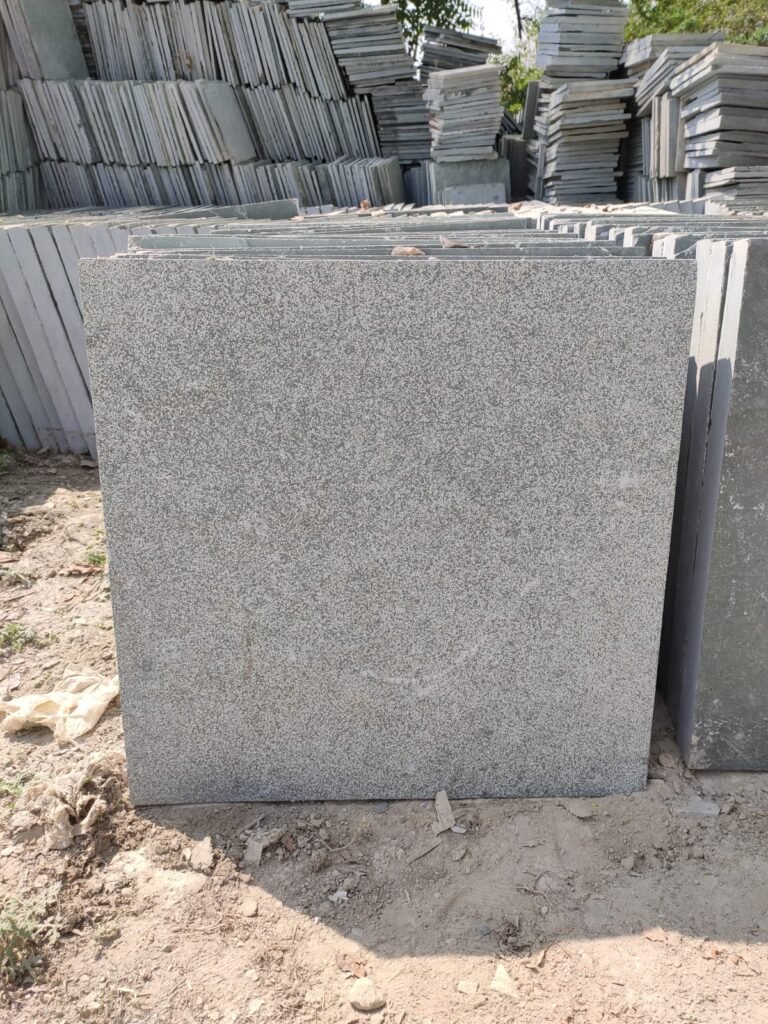
BASALT STONE
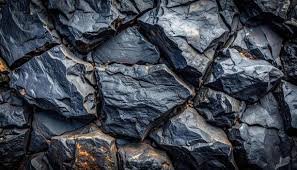
Basalt Stone – Durable, Natural & Built to Last
Basalt stone is a premium natural volcanic rock known for its strength, durability, and timeless appeal. Formed from rapidly cooled lava at the Earth’s surface, basalt has been used for centuries in construction and architecture due to its exceptional performance and natural beauty.
Characteristics of Basalt
Basalt is primarily defined by its durability and its distinct, sophisticated color palette.
Color Profile: Naturally ranges from charcoal grey to deep midnight black. When wet or polished, it takes on a sleek, obsidian-like sheen.
Density & Strength: It is incredibly dense and possesses high compressive strength, making it nearly impervious to heavy foot traffic and extreme weather.
Texture: In its raw form, it has a slightly grainy, matte texture. However, it can be processed into various finishes including honed, polished, flamed, or brushed.
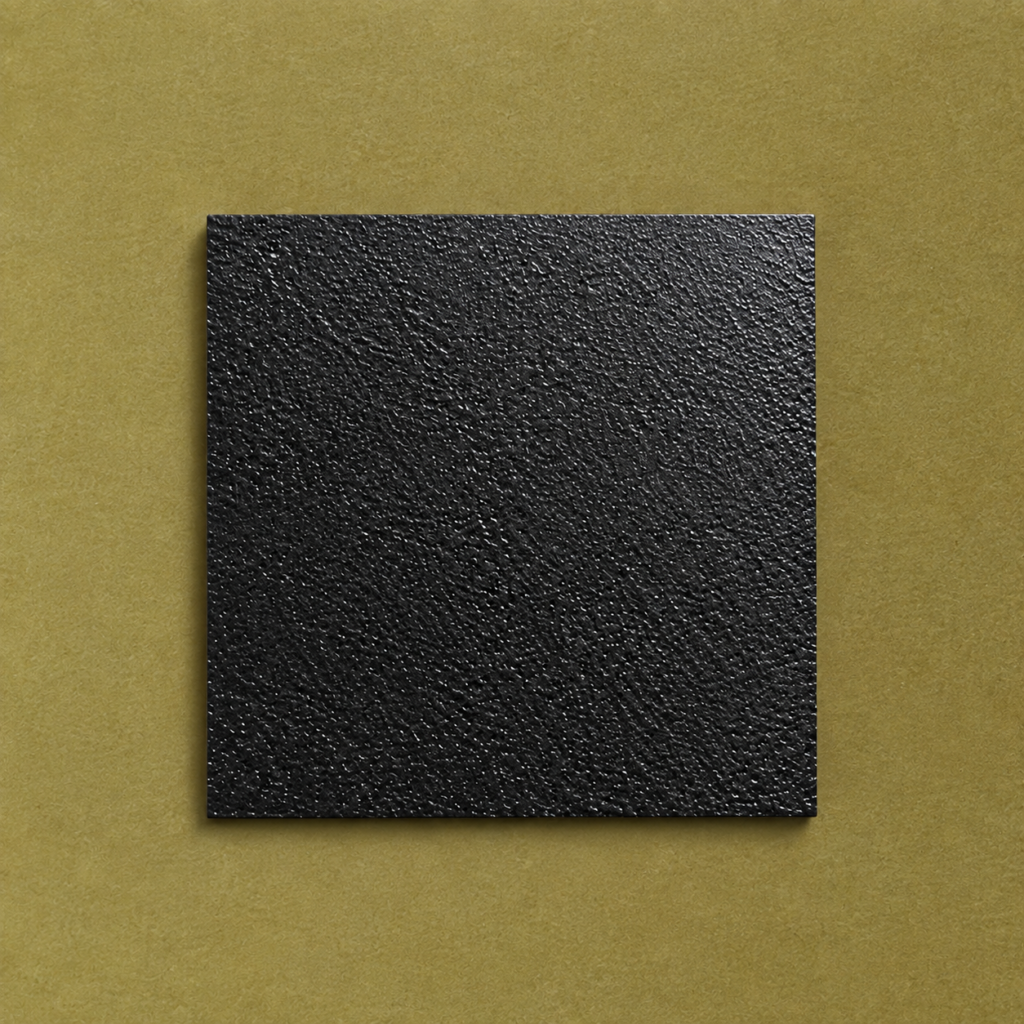
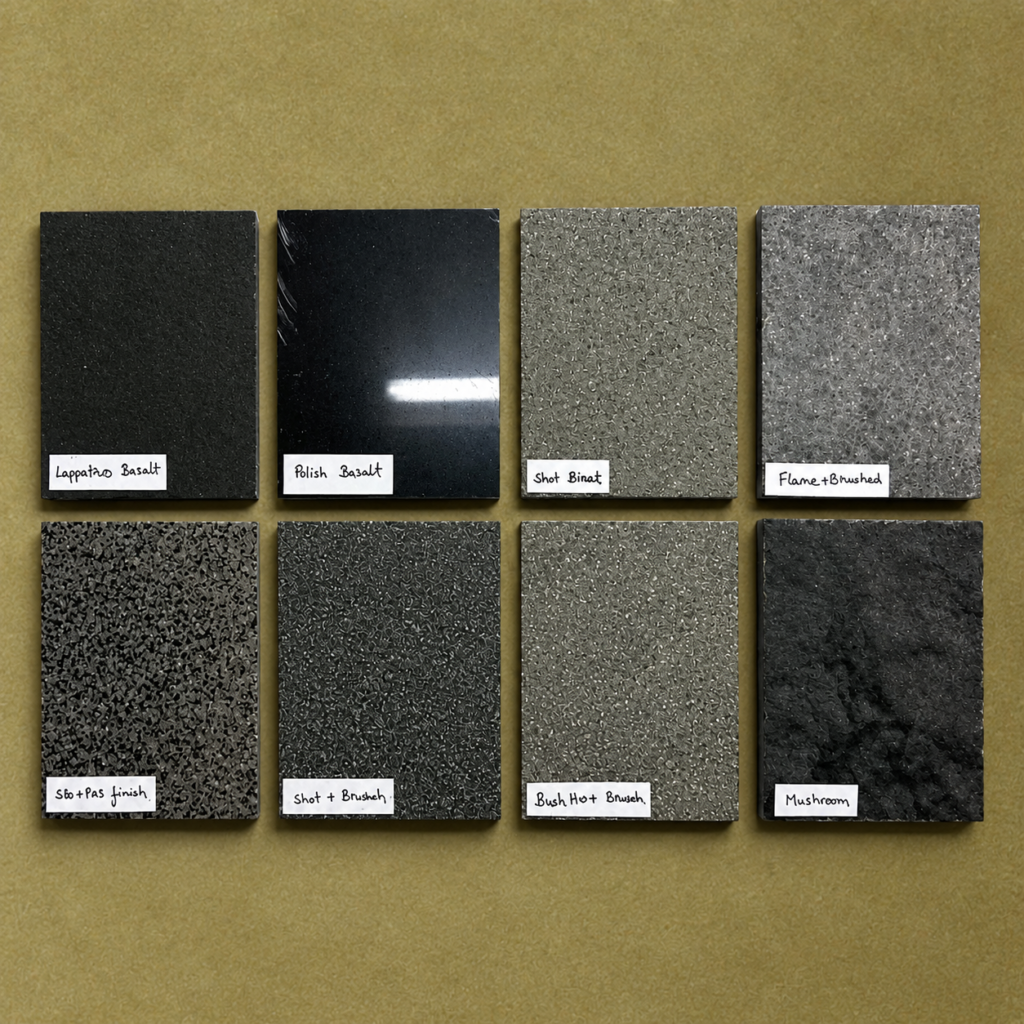
Basalt stone is commonly used:
1. Architectural & Home Design
In modern homes, Basalt is favored for its “minimalist” aesthetic and resistance to stains.
Flooring: High-traffic indoor areas like entryways, kitchens, and living rooms.
Countertops: A popular alternative to granite; it is heat-resistant and doesn’t scratch easily.
Wall Cladding: Thin basalt panels are used on exterior facades or interior “accent” walls for a sleek, dark look.
Bathroom Elements: Carved stone sinks (basins), bathtubs, and shower trays.
2. Landscaping & Outdoor Living
Basalt is a “forever” stone for the outdoors because it doesn’t fade or weather easily.
Pavers & Cobblestones: Used for driveways, garden paths, and European-style streetscapes.
Retaining Walls: Large basalt blocks or “split-face” stones are used to hold back soil and create terraced gardens.
Pool Coping: Because it can be finished with a non-slip (flamed) texture, it’s ideal for the edges of swimming pools.
Water Features: Basalt columns and fountains; the stone turns a beautiful deep black when wet.
3.Infrastructure & Construction
This is where the “heavy-duty” nature of Basalt shines.
Roads & Railways: Crushed basalt is the primary “aggregate” used in high-quality asphalt and as railroad ballast (the stones under the tracks) because it can handle immense pressure.
Marine Engineering: Used for seawalls, breakwaters, and docks because it is resistant to salt-water corrosion.
Public Plazas: Heavy-duty basalt slabs are the gold standard for city squares and pedestrian malls.
4. High-Tech & Industrial Applications
Beyond raw stone, basalt is melted and transformed into new materials:
Basalt Fiber: A “green” alternative to fiberglass and carbon fiber. It is used to make fireproof textiles, car mufflers, and even lightweight parts for airplanes.
Basalt Rebar: Used to reinforce concrete instead of steel, especially in bridges or coastal buildings, because it never rusts.
Industrial Linings: “Cast basalt” is used to line pipes that carry abrasive materials (like coal or gravel) because it is almost impossible to wear down.
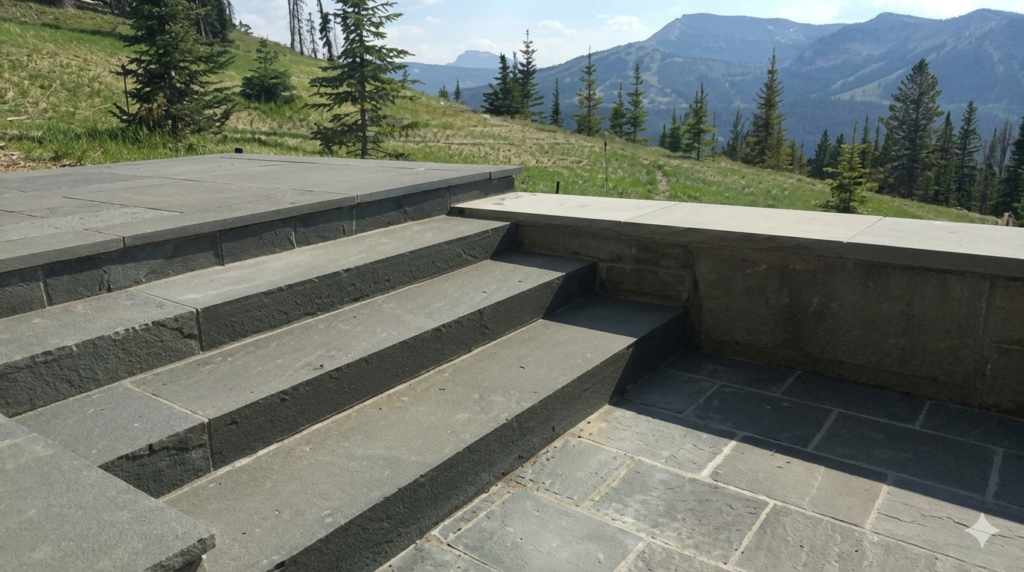
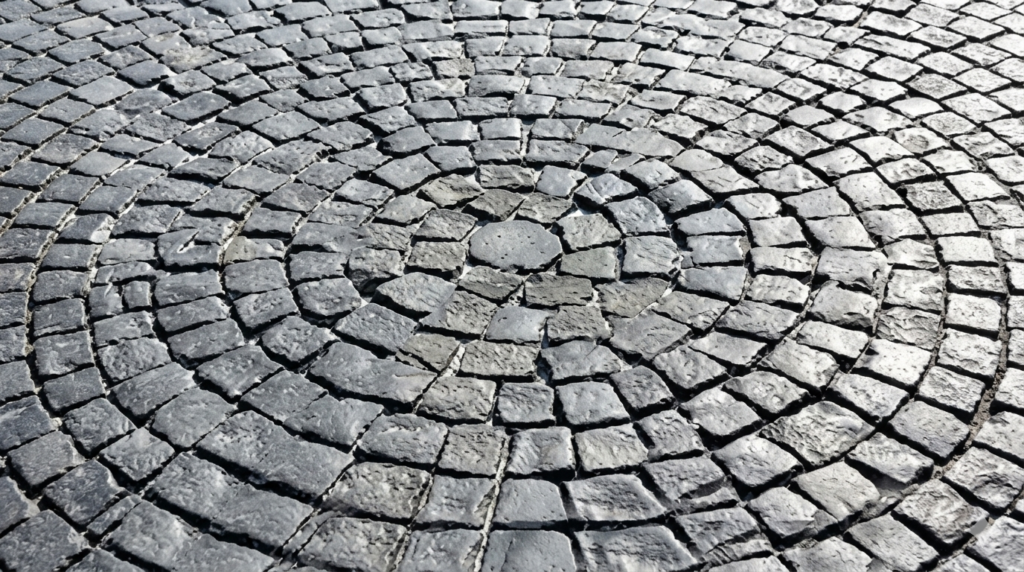
Basalt Stone – Durable Natural Stone for Modern Architecture
Basalt Stone is a strong and versatile natural stone known for its deep colour, fine-grained texture, durability, and timeless appearance. Formed from volcanic rock, Basalt has been used in architecture, construction, landscaping, flooring, paving, and exterior applications for many years. Its clean and contemporary appearance makes it suitable for both traditional and modern architectural projects.
For projects requiring a combination of strength, durability, low-maintenance performance, and natural beauty, Basalt Stone can be an excellent choice for residential, commercial, hospitality, and landscape applications.
What is Basalt Stone?
Basalt is an igneous natural stone formed when volcanic lava cools and solidifies. It generally features a dense and fine-grained structure, giving it excellent resistance to everyday wear and environmental conditions.
Depending on its origin and finish, Basalt Stone can have shades ranging from dark grey and charcoal to almost black, with subtle natural variations that give every piece its own character.
Its understated appearance allows Basalt to work well with a wide range of architectural materials, including glass, wood, concrete, metal, marble, and other natural stones.
Key Features of Basalt Stone
Basalt Stone is valued by architects, builders, contractors, and designers for several practical and aesthetic qualities:
-
High durability – Suitable for areas exposed to regular foot traffic and demanding conditions.
-
Dense natural structure – Provides strength and long-term performance.
-
Modern appearance – Dark grey to charcoal shades create a sophisticated architectural look.
-
Versatile applications – Can be used for flooring, paving, wall cladding, steps, landscaping, and other architectural requirements.
-
Low-maintenance surface – Properly selected and finished Basalt can be relatively easy to maintain.
-
Natural variation – Each stone has subtle differences in colour, texture, and pattern.
-
Suitable for indoor and outdoor use – Depending on the selected grade, thickness, and finish.
Basalt Stone Applications
One of the biggest advantages of Basalt Stone is its versatility. It can be used in a variety of residential and commercial projects.
Basalt Stone Flooring
Basalt is suitable for creating elegant and durable flooring in homes, offices, hotels, commercial spaces, and other architectural environments. Its darker tones can provide a clean and contemporary foundation for interior designs.
Basalt Stone Paving
Due to its strength and durability, Basalt can be used for outdoor paving applications such as walkways, pathways, courtyards, terraces, and selected high-traffic areas.
Basalt Stone Wall Cladding
Basalt wall cladding can add depth and character to both interior and exterior walls. Its natural dark appearance works particularly well in modern architectural designs.
Landscaping
Basalt Stone is widely suited to landscaping applications, including garden pathways, outdoor seating areas, steps, retaining features, borders, and decorative landscape elements.
Steps and Staircases
When properly selected for the required application, Basalt can be used for stair treads, steps, and entrance areas, providing a combination of durability and a premium natural-stone appearance.
Basalt Stone Finishes
Basalt Stone can be processed with different finishes depending on the design and functional requirements of a project. Common finishes may include:
Polished Finish: Creates a smoother and more reflective appearance for selected interior applications.
Honed Finish: Provides a smooth, understated surface with less reflection than a polished finish.
Flamed Finish: Creates a textured surface that can be suitable for certain exterior and anti-slip applications.
Shot-Blasted Finish: Provides a textured, matte appearance and can be considered for applications where additional surface texture is required.
Natural or Rough Finish: Retains more of the stone’s original texture and is often used for landscaping and rustic architectural designs.
Why Choose Basalt Stone?
Basalt offers a balance between visual simplicity and practical performance. Its dark natural colours can complement minimalist architecture, while its durable structure makes it suitable for demanding applications.
Unlike highly decorative materials, Basalt often provides a subtle architectural appearance that allows other elements of a project to stand out. This makes it a popular option for contemporary homes, commercial buildings, hotels, landscape projects, and modern public spaces.
Basalt Stone Supplier in Rajasthan
Rajasthan is one of India’s major natural stone-producing regions, with an established network of stone manufacturers, processors, suppliers, and exporters.
Classic Stone is a natural stone supplier and manufacturer based in Ramganj Mandi, Kota, Rajasthan, serving customers looking for quality stone products for residential, commercial, architectural, and bulk projects.
With experience in natural stone processing and supply, Classic Stone focuses on providing properly selected and processed stone according to project requirements. Customers can discuss requirements such as stone type, finish, thickness, size, quantity, and application before placing an order.
For buyers searching online for a Basalt Stone Supplier in Rajasthan, Classic Stone can provide assistance with product selection and bulk natural stone requirements.
Basalt Stone for Architects, Builders and Bulk Buyers
Natural stone selection depends on more than appearance. Architects, builders, contractors, dealers, and project developers generally need to consider factors such as application, thickness, surface finish, dimensions, quantity, transportation, and installation requirements.
Classic Stone works with different types of buyers and project requirements, making it possible to discuss customized stone specifications for larger orders.
Whether the requirement is for flooring, paving, wall cladding, landscaping, steps, or architectural applications, selecting the appropriate Basalt Stone grade and finish is important for achieving the desired performance and appearance.
Classic Stone – Natural Stone Supplier & Manufacturer in Rajasthan
Classic Stone has built its business around the supply and manufacturing of natural stone products from Rajasthan. Based in Ramganj Mandi, Kota, the company serves customers across India and works with dealers, contractors, builders, architects, and bulk buyers.
The focus is on consistent product quality, appropriate finishing, customized sizes, and dependable supply for different project requirements.
For customers looking for a Basalt Stone Supplier and Manufacturer in Rajasthan, Classic Stone provides a convenient source for discussing natural stone requirements and bulk orders.
Frequently Asked Questions About Basalt Stone
Is Basalt Stone suitable for flooring?
Yes. Basalt can be used for flooring in suitable indoor and outdoor applications. The appropriate finish and thickness should be selected according to the location and expected traffic.
Is Basalt Stone durable?
Basalt is a dense and durable natural stone and is commonly used in construction, paving, flooring, and landscaping applications.
What colour is Basalt Stone?
Basalt commonly occurs in dark grey, charcoal, and blackish shades, although colour and texture can vary depending on the stone source.
Can Basalt Stone be used outdoors?
Yes, selected Basalt products and finishes can be used for outdoor applications such as paving, pathways, landscaping, steps, and wall cladding.
Where can I buy Basalt Stone in Rajasthan?
Buyers can contact Classic Stone in Ramganj Mandi, Kota, Rajasthan to discuss Basalt Stone and other natural stone requirements, including sizes, thicknesses, finishes, and bulk quantities.
Choose Natural Stone with the Right Specification
The right natural stone can influence both the appearance and long-term performance of an architectural project. Basalt Stone offers a distinctive combination of natural beauty, durability, and versatility, making it suitable for a wide range of contemporary and traditional applications.
For Basalt Stone, Kota Stone, natural stone flooring, slabs, tiles, and customized stone requirements, Classic Stone serves customers from Rajasthan and across India.
Classic Stone – Trusted Natural Stone Supplier & Manufacturer in Rajasthan.
OTHER STONES